
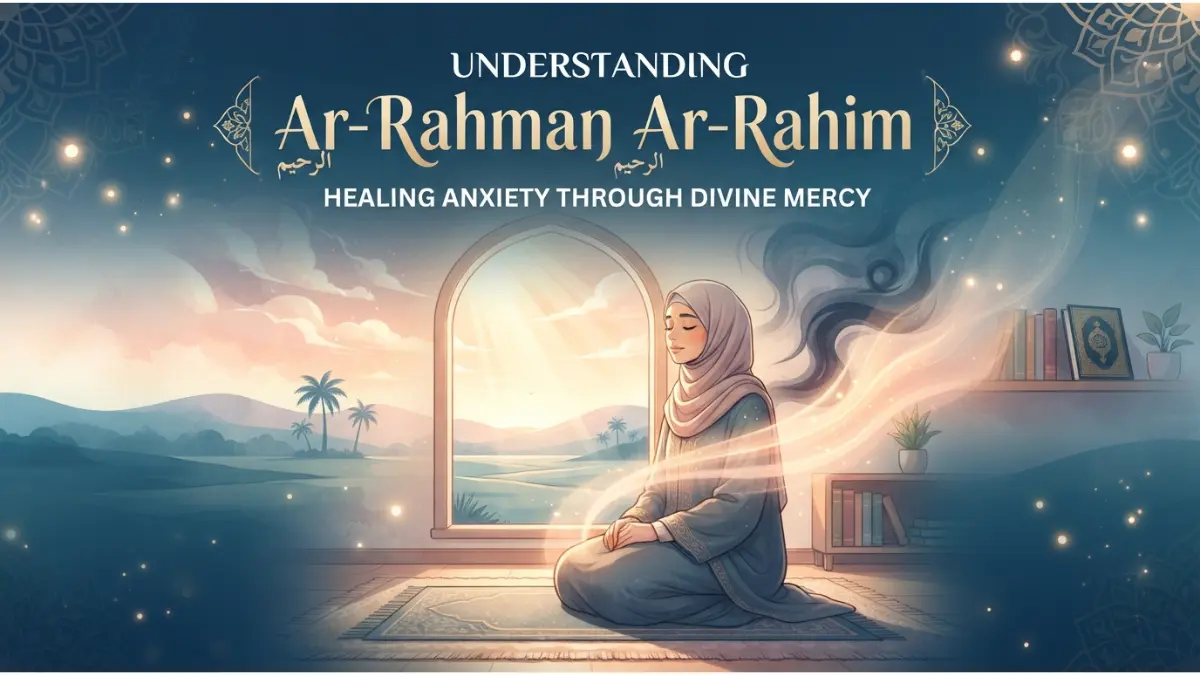
When the World Feels Cold
Have you ever felt like the world around you turned completely cold? Perhaps you reached a breaking point where your relentless hard work at the office goes unnoticed and unappreciated, or at home, you feel as though no one truly understands the heavy emotional burdens you carry. It often feels as if society demands us to constantly project strength, maintain unwavering professionalism, and remain flawless. Yet, almost no one stops to ask with genuine care, “Are you truly doing okay?”
In those quiet moments when feelings of emptiness and isolation creep in, pause for a moment and turn your heart to Surah Al-Fatihah verse 3 : Ar-Rahman Ar-Rahim (The Most Gracious, The Most Merciful).
Consider the placement of this verse within the holy text. Allah SWT, the Sovereign Lord of the Universe whom we praise in the preceding verse, immediately introduces Himself through the lens of profound tenderness, grace, and compassion. This sequence is by no means coincidental. Allah intentionally wants humanity to understand that while people may disappoint us and the dynamics of the world can be harsh, there exists a Divine Creator whose embrace of unconditional love knows no bounds and never expires.
Diving Deep into the Meaning of Ar-Rahman and Ar-Rahim
The titles Ar-Rahman and Ar-Rahim are frequently translated into English as “The Most Gracious” and “The Most Merciful.” However, when we break down their linguistic Arabic roots (derived from R-H-M, the same root for the womb, symbolizing protective nurturance), their spiritual depth reveals a much richer dynamic:
- Ar-Rahman (الرَّحْمَٰنِ): Represents Allah’s boundless, all-encompassing mercy that pours over every created being without exception, regardless of whether they believe in Him or not. The clean air we breathe every second, the warmth of the morning sun, the beating of our hearts, and the intricate order of the cosmos are all tangible proofs of Ar-Rahman. It is the unconditional, baseline sustenance provided by the Creator to fuel physical existence.
- Ar-Rahim (الرَّحِيمِ): Represents Allah’s specialized, deeply personal, intimate, and everlasting mercy. This unique compassion is poured specifically upon those who actively step closer to Him, nourish their faith, and maintain a conscious relationship with their Maker. While Ar-Rahman sustains our physical bodies in this temporary world, Ar-Rahim guards our hearts with inner peace and grants salvation in the Eternal Life.
The deliberate pairing of these two attributes reminds us that divine mercy operates on both a macro-universal level and a micro-personal level. You are sustained by the cosmic grace of Ar-Rahman while simultaneously being invited into the intimate emotional shelter of Ar-Rahim.
Dismantling the Logic of Human Validation
In today’s hyper-competitive world, modern culture conditions us to believe that love, acceptance, and validation must always be earned through achievement or perfection. We fall into the trap of believing we must become star performers at work before earning respect from our bosses, maintain flawless physical appearances before deserving affection from partners, or accumulate material wealth before society acknowledges our worth. Consequently, we burn out, running on an endless treadmill chasing human validation that never satisfies.
The principle of Ar-Rahman Ar-Rahim radically dismantles this transactional mindset. Allah does not extend His love to you because you achieved massive worldly success today or presented a flawless resume. Allah loves you simply because He is your Master and you are His cherished creation. Internalizing this realization is a profound paradigm shift.
When your soul rests securely in the unconditional grace of Allah, you stop begging for validation from human beings. You begin to navigate life with calm clarity, make decisions free from toxic people-pleasing, and unlock an abundance of emotional energy to serve others without fearing a loss of prestige or applause.
Psychological and Neurological Impact of Meditating on Mercy
Modern neuroscience and psychology validate the transformative effects that contemplating divine mercy has on the human mind and nervous system:
- Alleviating Hypervigilance: When living under constant social pressure, the human brain’s threat detector (the amygdala) remains hyperactive, driving chronic stress and anxiety. Reminding oneself that the Master of the Universe operates through Ar-Rahman Ar-Rahim shifts the nervous system into a parasympathetic state, lowering heart rate and promoting mental restoration.
- Healing Shame Culture: Transactional environments induce deep feelings of inadequacy and shame. Embracing Ar-Rahim helps individuals reframe mistakes not as fatal flaws, but as opportunities to return to a forgiving God who welcomes sincere efforts over rigid perfection.
- Fostering Resilience: Studies in positive psychology show that individuals who view God through attributes of warmth and mercy develop significantly higher psychological resilience during crises compared to those who view God primarily through fear or punishment.
Real-Life Story: The Love Letter Hidden Behind Adversity
Consider the story of an entrepreneur who experienced a devastating business collapse. Within months, his company went bankrupt, his vehicle was repossessed, his family home was foreclosed, and his life savings evaporated. At his lowest point, he whispered in despair, “God is unfair. If He truly loved me, why did He allow me to fall so hard?”
One evening, sitting on the porch of a small, cramped rental apartment, he stared blankly into the night. His attention drifted to his young child, who was laughing joyfully while playing with a stray cat nearby. Next to him, his wife smiled gently as she handed him a simple cup of warm tea.
Suddenly, a powerful wave of realization struck his heart: His child still had food to eat, his lungs were healthy enough to breathe freely, and he was blessed with a faithful family standing by his side through rock bottom.
That night, he wept openly—not out of sorrow, but out of immense gratitude. He realized he had been so fixated on one closed door of financial loss that he turned a blind eye to the ocean of Allah’s daily mercy (Ar-Rahman) still flowing through blessings money could never buy. He understood that were it not for divine strength, his spirit would have broken long ago. From that moment on, he no longer saw life’s trials as punishments, but as a necessary purification leading toward spiritual maturity.
Daily Practical Challenge: Living the Mercy Mindset
To ensure this reflection translates into real-life action, commit to trying these three practical steps over the next 24 hours:
- The ‘Unearned Blessings’ Audit: Take a piece of paper or open a note app on your phone. List 3 blessings you enjoyed today that you never explicitly prayed for (e.g., restful sleep, favorable weather, or a safe neighborhood). This exercise trains your mind to recognize the active footprint of Ar-Rahman in daily life.
- Extend Unconditional Grace: Choose to respond with extra patience and warmth toward the most difficult or frustrating person you encounter today. Channel divine mercy by allowing others to experience a reflection of Ar-Rahim through your gentle words and demeanor.
- Midnight Vulnerability: Tonight before sleeping, spend 5 quiet minutes expressing your raw fears, insecurities, and hopes to Allah. Talk to Him knowing He loves you more than anyone in existence. Hide nothing; lay your heart bare.
Short Prayer of the Day
“O Allah, fill my heart with a deep awareness of Your vast mercy. Expand my chest when the world feels narrow and overwhelming, make Your comforting presence felt in my moments of solitude, and guide my hands and tongue so that I may mirror Your tenderness and compassion toward all Your creations on earth. Ameen.”
Discussion & Frequently Asked Questions (FAQ)
Question: “If Allah is truly Most Gracious and Most Merciful (Ar-Rahman Ar-Rahim), why does He allow poverty, natural disasters, and human suffering to exist in the world?”
Answer: This is a profound, logical, and human question. To understand this, we must remember that Allah’s attribute of mercy (Ar-Rahman) never operates in isolation from His supreme Wisdom (Al-Hakim) and All-Knowing Nature (Al-‘Alim). The presence of hardship in this life is not evidence of God’s absence or lack of love.
Often, what human perception labels as “suffering” serves as a spiritual medicine—purifying sins, building emotional maturity, awakening empathy, or redirecting us away from greater spiritual ruin in the long run. Consider a parent allowing a doctor to give their sick child a painful injection; the child experiences it as pain, yet the parent allows it out of deeper love for the child’s long-term health. Divine mercy does not always manifest as immediate comfort; sometimes it takes root as quiet inner strength amid life’s storms.
Additional Question: “How can I feel Ar-Rahim when I feel overwhelmed by my past sins?”
Answer: Despair over one’s past is the ultimate trick of self-isolation. The name Ar-Rahim exists specifically to reassure us that no sin is larger than Allah’s capacity to forgive. When a servant takes one step toward Allah in sincere repentance, Allah turns toward them with overwhelming grace. Your past mistakes do not disqualify you from His mercy; they are the very reason His mercy exists.
Engage with Our Reflection Community!
In what specific moment of your life did you feel most clearly held and comforted by the mercy of Allah SWT? Share your inspiring story in the comments section below to uplift others!
Surah Al-Fatihah Navigation Index:
- [Return to Introduction: Surah Al-Fatihah Overview]
- [Return to Verse 2: Alhamdulillahi Rabbil ‘Alamin]
- [Proceed to Verse 4: Maliki Yawmid Din]