
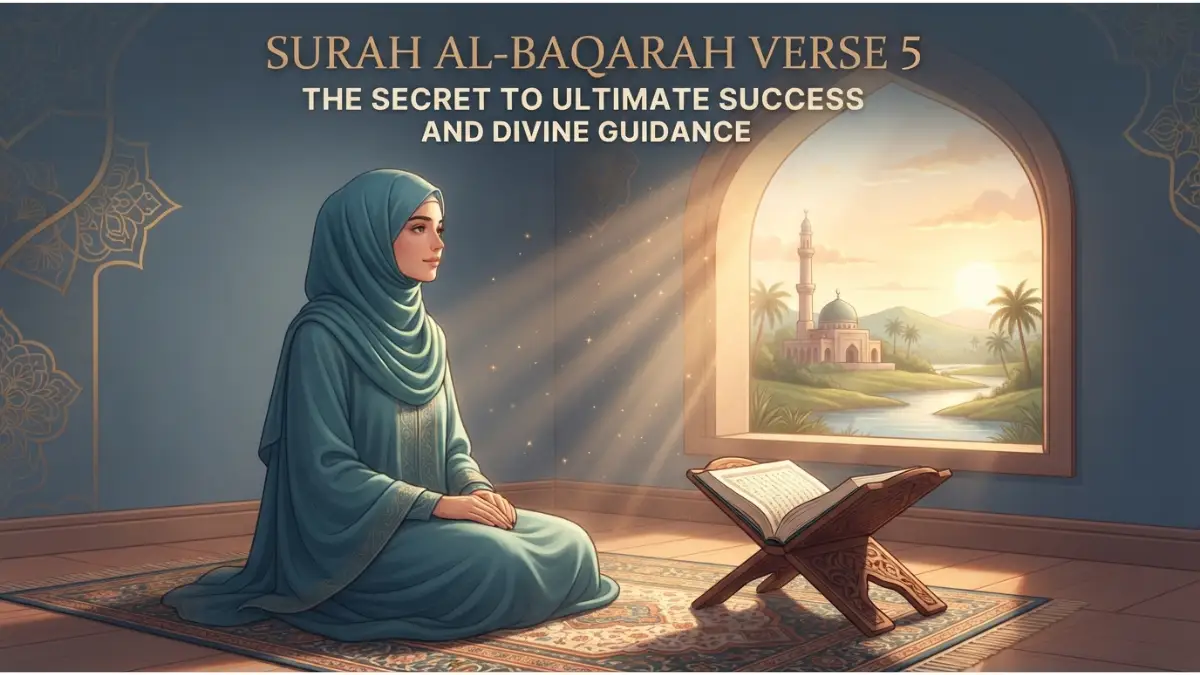
The Secret to Becoming a True Winner: Deconstructing Real Success and Divine Guidance
In the high-stakes arena of modern life, virtually every human being is chasing the exact same destination: success, prosperity, and fulfillment. However, the worldly definition of what it truly means to be “successful” or “fortunate” has been deeply distorted by societal narratives. A person who commands vast financial capital, holds a high-status corporate title, maintains millions of social media followers, or resides in an opulent mansion is routinely celebrated as a triumphant winner. Conversely, those who lead modest lives or have weathered financial hardship are often quietly dismissed as underprivileged or unsuccessful.
Yet, empirical reality consistently reveals that material abundance does not automatically guarantee internal tranquility. Countless individuals who have reached the absolute peak of worldly success find themselves grappling with chronic anxiety, spiritual isolation, and a deep-seated fear of losing what they have accumulated. They may possess the world, but they fail to master peace within their own hearts.
Through Surah Al-Baqarah Verse 5, the Holy Quran radically deconstructs this superficial understanding of prosperity. After the first four verses establish the fundamental traits of the God-conscious (Al-Muttaqin)—ranging from unwavering belief in the unseen and commitment to regular prayer, to generous charity and openness to revelation—Verse 5 arrives as the ultimate divine confirmation and crowning reward for those who walk the path of obedience.
Let us closely examine this magnificent verse of the Holy Quran:
“Ula’ika ‘ala hudam mir-rabbihim wa ula’ika humul-muflihun”
“They are on [true] guidance from their Lord, and it is they who are the successful.” (Surah Al-Baqarah: 5)
Linguistic Breakdown: The Depth of “Huda” and the Essence of “Al-Muflihun”
The precise linguistic structure chosen by Allah SWT in this concise verse holds profound theological, philosophical, and psychological weight according to classical scholars of Quranic exegesis (Mufassirun):
1. The High Honor of the Demonstrative Pronoun Ula’ika (أُولَٰئِكَ)
In Arabic grammar, Ula’ika is a far-pointing demonstrative pronoun (“Those”). By addressing the believers with a far-pointing pronoun rather than a near one, the text conveys immense honor, elevation, and exaltation (ta’zhim). It signifies that those who cultivate God-consciousness (Taqwa) occupy a high, noble, and exalted rank in the sight of their Creator, far above worldly standards of measurement.
2. The Profound Imagery of the Preposition ‘Ala (عَلَىٰ) in ‘Ala Hudan
The choice of the preposition ‘ala (meaning “upon” or “above”) carries immense substantive meaning. To state that believers are ‘ala hudan implies that they are not merely walking alongside guidance; rather, they are firmly mounted upon guidance. Divine guidance serves as their unshakeable foundation, their elevated vantage point, and the steady vehicle that carries them across the turbulent ocean of life’s trials without the fear of losing their direction.
3. The Nurturing Comfort of Mir-Rabbihim (مِن رَّبِّهِمْ)
The verse explicitly highlights that this guidance originates min rabbihim (“from their Lord”). The choice of the Divine attribute Ar-Rabb (The Sustainer, Cherisher, and Nurturer) rather than other names emphasizes that guidance (hidayah) is not a cold intellectual theory. Instead, it is an act of supreme divine care, designed to nurture, protect, and rescue humanity from existential confusion and moral decay.
4. Holistic Triumph in the Concept of Al-Muflihun (الْمُفْلِحُونَ)
The term al-muflihun stems from the Arabic root falah (فَلاَحٌ), which fundamentally means to plow, cleave, or cultivate. In ancient Arabic, a farmer is referred to as a fallah because he breaks through the tough soil, plants seeds, nurtures them, and eventually reaps a bountiful harvest. Therefore, al-falah signifies the ultimate, complete victory: an individual who has broken through life’s hardships, sown seeds of righteousness, and harvested eternal success—both in this world (Dunya) and in the Hereafter (Akhirah).
Furthermore, the grammatical structure of restriction (hasr) created by combining wa ula’ika humu (“and it is they who are…”) firmly establishes that absolute, lasting success belongs exclusively to those who hold fast to Allah’s divine guidance.
Why Divine Guidance (Huda) Is the Ultimate Asset
Anchoring one’s life in divine revelation is the single greatest safeguard against spiritual bankruptcy. There are three core reasons why divine guidance forms the indispensable bedrock of genuine prosperity:
- Anchor of Certainty in an Uncertain World: Earthly existence is inherently volatile. Global economies fluctuate, physical health wanes, and human relationships change. However, an individual whose heart is attached to divine guidance possesses an unshakeable inner compass. They remain calm amidst life’s storms because they recognize that every scenario is orchestrated by a wise Creator.
- Liberation from Superficial Human Standards: Lacking divine direction, people easily fall prey to societal rat races that exhaust their mental and emotional energy. Divine guidance liberates the human soul from the insatiable thirst for peer validation, redirecting focus toward what holds eternal value in the sight of God.
- Balanced Character in Prosperity and Adversity: A person grounded in guidance neither succumbs to arrogance at the peak of financial success nor falls into utter despair during moments of hardship. They view wealth as a responsibility to be shared and trials as temporary tests to elevate their spiritual standing.
An Inspiring Narrative: Redefining the Meaning of Prosperity
The timeless truth embedded within Surah Al-Baqarah Verse 5 is vividly illustrated in the real-life journey of a modern entrepreneur:
A few years ago, a ambitious young business owner built a manufacturing enterprise from the ground up. Within a short span of time, his venture expanded exponentially. He accumulated significant assets, drove luxury cars, and was widely celebrated by his community as a symbol of self-made success. During this phase, he genuinely believed he was one of the luckiest individuals alive. Unknowingly, however, his obsessive pursuit of wealth eroded his spiritual life, rendered his home atmosphere cold, and planted a constant, subtle anxiety in his mind.
When an unexpected economic downturn struck, his enterprise suffered devastating losses, ultimately forcing him into bankruptcy. His physical assets had to be liquidated to settle debts. During the initial months of his collapse, he felt utterly defeated, viewing himself as a complete failure. The world felt empty and dark.
Stripped of his worldly distractions, he began attending local Quranic study circles, establishing regular congregational prayers, and engaging in deep daily reflection (tadabbur). Slowly, his perception of existence underwent a radical transformation. He began to realize that while his bank account was once full, his soul had been completely impoverished.
Years later, operating a modest local business and living simply, his face and speech radiated a profound peace that his wealth had never provided. He once shared a memorable reflection: “In my former life, I had everything money could buy, yet I never knew genuine peace. Today, my material means are modest, but my heart feels immensely rich because I have reconnected with my Creator. The greatest stroke of fortune in my life was not when my business hit its peak, but when Allah guided me back to Him through the painful door of adversity.”
Practical Protocols: Evaluating Daily Alignment with Guidance
To ensure that the profound lessons of Surah Al-Baqarah Verse 5 transform our daily routines, implement these three practical steps for self-evaluation:
- Redefine Your Personal Metrics of Success: Take a notebook and honestly answer this question: “What metrics have I been using to define whether my life is successful?” Compare your list against the criteria set by Allah in the Quran. Work daily to shift your definition of success from worldly accumulation to spiritual proximity to God.
- Acknowledge and Thank God for Moments of Guidance: Reflect regularly on past moments where you were on the verge of making a harmful decision or committing a sin, but Allah inclined your heart to walk away. Recognize that these moments were direct manifestations of His nurturing guidance (Huda).
- Evening Spiritual Audit: Before sleeping each night, ask yourself: “Did I feel successful today because of a material achievement, or did I feel fortunate because I was blessed to spend another day walking in obedience to my Lord?”
“O Allah, the Sustainer and Nurturer of souls, place us among Your servants who walk firmly upon Your divine guidance. Grant us true success—a success that brings serenity to our hearts, tranquility to our minds, and secures Your eternal pleasure in this life and the Hereafter. Amin Ya Rabbal ‘Alamin.”
Frequently Asked Questions (FAQ)
Question: “Why do we often see individuals who disregard divine guidance enjoying vast wealth, influence, and physical comfort? Does this contradict Surah Al-Baqarah Verse 5?”
Answer: This scenario does not contradict the Quran in the slightest. The Quran clearly distinguishes between temporary worldly provisions (Mata’) and true, lasting success (Al-Muflihun):
- Material Abundance as a Test (Istidraj): Wealth granted to those who turn away from God can often serve as a gradual test or form of deception (Istidraj). Material riches lacking divine guidance frequently lead to heightened anxiety, unquenchable greed, broken personal relationships, and ultimate spiritual ruin.
- True Success Is Peace of the Soul: The Quranic concept of Falah encompasses authentic inner contentment, mental tranquility, and eternal salvation in the Hereafter. Earthly wealth is merely a temporary tool, whereas Huda (guidance) is the enduring wealth of the soul that accompanies us into eternity.
What simple blessing or spiritual guidance in your life today makes you feel truly successful and deeply grateful before Allah? Share your thoughts and reflections in the comments below!
This article is part of the thematic study series: Exploring Surah Al-Baqarah: A Blueprint for Life
- Return to the Introduction of Surah Al-Baqarah
- Previous: Reflection on Verse 4 – Openness to Divine Wisdom
- Next: Reflection on Verse 6 – Why Hearts Become Sealed