
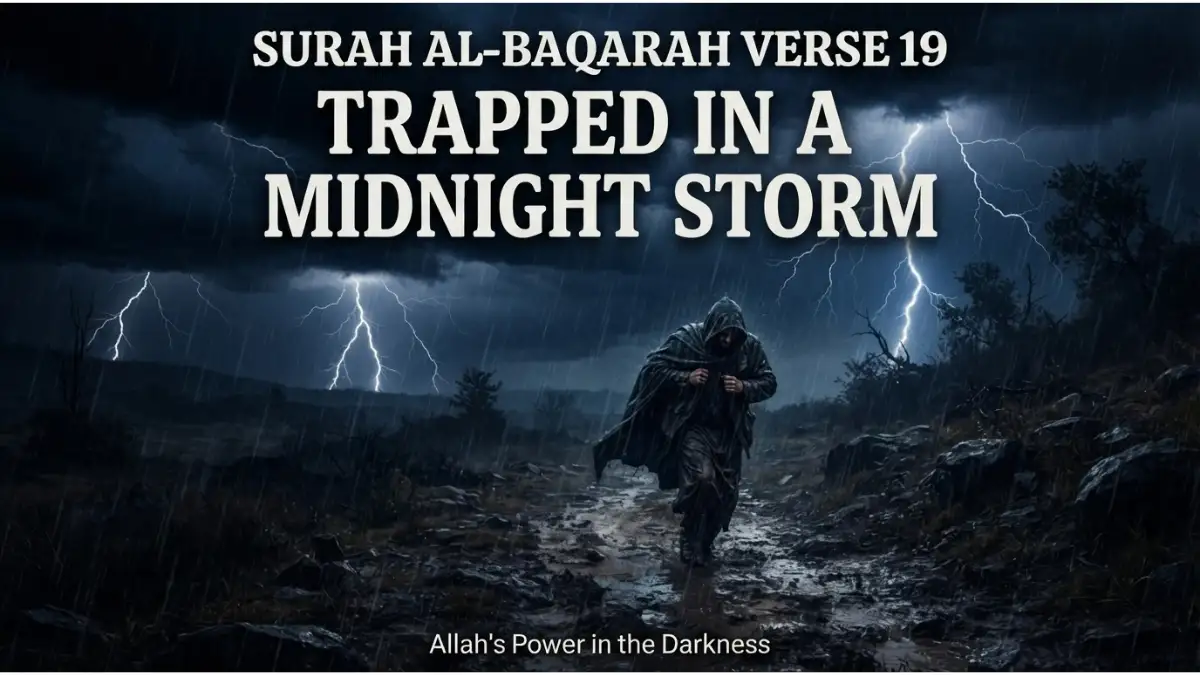
Introduction: When Life Feels Terrifying Without an Anchor
Following the previous analysis in verse 18 regarding the internal psychological paralysis of the hypocrites—described as “deaf, dumb, and blind”—Surah Al-Baqarah verse 19 introduces a second, highly dramatic, cinematic, and external parable. While verse 17 focused on the loss of personal illumination, verse 19 captures the overwhelming experience of a person with fluctuating faith when confronted by severe worldly crises and intense divine warnings.
Allah Almighty states:
“Aw ka-ṣayyibin minas-samā’i fīhi ẓulumātun wa ra‘dun wa barqun, yaj‘alūna aṣābi‘ahum fī ādhānihim minas-ṣawā‘iqi ḥadharal-mawt, wallāhu muḥīṭun bil-kāfirīn.”
Translation: “Or [it is] like a rainstorm from the sky within which is darkness, thunder, and lightning. They put their fingers in their ears against the thunderclaps in dread of death. But Allah is encompassing of the disbelievers.” (QS. Al-Baqarah: 19)
Visualize this intense scene with vivid sensory clarity: You are traveling on foot through an open, desolate plain late at night. Suddenly, the sky turns pitch black (ẓulumāt). A torrential downpour erupts (ṣayyib), violent deafening thunder shakes the earth (ra‘d), and blinding bolts of lightning slice through the darkness (barq). Caught in sheer panic, your natural human reflex is to press your fingers tightly into your ears, desperate to block out the terrifying sound of thunderbolts and the terrifying dread of imminent death (ḥadharal-mawt).
This powerful natural metaphor accurately maps the psychological condition of individuals who attempt to maneuver through life while divided in their loyalties to divine guidance.
Deconstructing the Metaphorical Elements of the Storm
Quranic scholars and mufassirūn explain that every natural component mentioned in verse 19 represents a profound spiritual and existential reality regarding human nature and divine revelation:
- The Downpour (Sayyib) — Divine Revelation and Sacred Law: In nature, heavy rain is the primary source of life, fertility, and ecological renewal. Similarly, the Quran and Islamic teachings represent life-giving rain for the human soul. However, for a heart harboring hidden insincerity, resistance, or divided motives, this life-giving rain feels like an overwhelming burden accompanied by unsettling demands.
- Pitch Darkness (Ẓulumāt) — Chronic Doubt and Internal Ambiguity: Darkness represents the unsettled state of a mind lacking firm conviction. An individual who attempts a double life—seeking the benefits of faith while stubbornly holding onto unethical practices—remains trapped in a confusing, terrifying darkness whenever personal trials arise.
- Thunder (Ra‘d) and Lightning (Barq) — Divine Admonition and Strict Prohibitions: The roaring thunder represents the sharp warnings, accountability, and legal boundaries outlined in revelation. To a spiritually fragile ego, hearing strict reminders regarding ethical accountability or judgment feels as shocking and frightening as a sudden clap of thunder.
- Placing Fingers in Ears (Yaj‘alūna Aṣābi‘ahum) — The Illusion of Denial and Evasion: Thrusting fingers into one’s ears represents an infantile coping mechanism. Just as plugging your ears does not stop the thunderbolt from striking, turning a blind eye to moral accountability does not alter reality. It symbolizes the absurdity of trying to escape truth by pretending not to hear it.
Comparative Table: Symbolic Elements vs. Spiritual Realities
The following detailed comparison outlines how the physical components of the storm in verse 19 translate into human internal experiences during life crises:
| Natural Element (Verse 19) | Physical Reality | Spiritual & Psychological Reality |
|---|---|---|
| Rainstorm (Ṣayyib) | Heavy atmospheric water that brings life and renewal. | Divine Guidance (Quran): Nourishment for the soul that requires commitment. |
| Darkness (Ẓulumāt) | Absence of light causing physical disorientation. | Doubt & Hypocrisy: Internal conflict caused by incomplete submission. |
| Thunder (Ra‘d) | Powerful sonic vibration accompanying lightning. | Severe Warnings: Revelations concerning judgment, sin, and responsibility. |
| Lightning (Barq) | Brief, intense flashes of blinding light. | Fleeting Moments of Truth: Sudden realizations that startle the conscience. |
| Blocking Ears | Attempting to shut out terrifying sound waves. | Moral Evasion / Denial: Deliberately ignoring constructive criticism or religious truth. |
Exegesis & Classical Interpretations: Encompassed by Divine Knowledge
Classical commentators provide rich insights into the underlying theological principles of this verse:
Ibn Kathir explains that the rainstorm represents the message brought by the Prophet Muhammad. While rain brings life to the earth, it also brings darkness, thunder, and lightning to those caught unprepared. Similarly, while the Quran brings life to believers, its strict prohibitions and warnings terrify the hypocrites who fear losing their worldly advantages.
Al-Qurtubi analyzes the phrase “yaj‘alūna aṣābi‘ahum fī ādhānihim” (they put their fingers in their ears). He points out the exaggeration in using aṣābi‘ (fingers) instead of fingertips (anamil). This linguistic choice highlights the extreme panic and desperate effort made by individuals to block out reminders that disturb their comfort zones.
Al-Tabari emphasizes the closing declaration: “Wallāhu muḥīṭun bil-kāfirīn” (And Allah encompasses the disbelievers). This statement serves as a definitive theological boundary. No matter how frantically a person attempts to dodge truth, evade accountability, or run from divine law, they remain completely within God’s sovereign control. Escape from God is impossible; true safety lies only in returning to Him.
Modern Context: Crisis Management and the Psychology of Denial
In contemporary life, the “midnight storm” described in verse 19 symbolizes sudden existential or personal crises—financial collapse, severe health diagnoses, broken relationships, or career failure. Examining human reactions to these events reveals striking parallels:
- The Trap of Chronic Denial (Evasion): When faced with overwhelming problems, many individuals instinctively “plug their ears.” They ignore warning signs, refuse professional advice, avoid difficult conversations, and seek temporary escapism through addictions, entertainment, or reckless distractions.
- Paralyzing Anxiety vs. Active Resolution: Fear of death or loss (ḥadharal-mawt) can consume the human mind to the point of functional paralysis. Without a firm spiritual foundation, individuals spend immense energy fearing hypothetical disasters rather than taking constructive, grounded steps toward resolution.
- Misinterpreting Hardships as Hostility: Just as the hypocrites viewed the life-giving rain purely as a terrifying storm, spiritually ungrounded individuals view life’s challenges purely as unfair punishments rather than transformative opportunities for growth, humility, and realignment.
Case Study: The Financial Tempest and the Danger of Avoidance
Consider the story of Julian, a small-business owner who expanded his operations rapidly using high-interest commercial loans. When market conditions shifted unexpectedly, his revenues plummeted, and debt notices began piling up like thunderclaps.
In sheer panic, Julian’s initial reaction was complete evasion—the modern equivalent of putting fingers in one’s ears. He stopped opening his mail, ignored phone calls from creditors, lied to his business partners, and spent late nights drinking to numb his surging anxiety. He lived in constant fear of financial ruin (his personal ḥadharal-mawt).
Predictably, his avoidance strategy exacerbated the crisis. Interest accrued rapidly, lawsuits were initiated, and his mental health deteriorated. His breakthrough occurred only when a close friend confronted him with gentle firmness, reminding him that running away from reality solves nothing.
Julian finally unclogged his ears. He opened the mail, faced his financial metrics honestly, met with his creditors to structure a realistic repayment plan, and sought divine help through earnest prayer. By confronting the storm directly instead of hiding from it, he gradually restored stability to his business and peace to his heart.
Three Practical Action Steps to Navigate Life’s Storms
To cultivate emotional resilience and spiritual grounding when unexpected trials strike, practice these three actionable principles:
- Unplug Your Ears and Face Difficult Truths: Identify one uncomfortable reality, constructive critique, or pressing issue you have been actively avoiding. Dedicate time today to confront it calmly, objectively, and without defensive posturing.
- Shift from Panic to Reliance (Tawakkul): When anxiety threatens to paralyze your mind during a crisis, repeat the classic declaration of trust: “Ḥasbunallāhu wa ni‘mal-wakīl” (Sufficient for us is Allah, and He is the best disposer of affairs). Remind yourself that God encompasses every detail of your situation.
- Reframe Challenges as Spiritual Purification: Recognize that difficult rules, moral boundaries, and life trials are not designed to destroy you; like the rainstorm, they are meant to cleanse your life of toxicity and foster true growth.
Supplication for Serenity During Hardship
We ask Allah Almighty for steadfastness, peace, and unwavering faith in the midst of life’s tempests:
“O Allah, Creator of the heavens and the earth, protect us when terrifying storms gather in our lives. Preserve our minds from paralyzing fear, panic, and self-destructive evasion. Grant peace to our hearts when trial thunderclaps strike around us, and make us among those who seek refuge in You, trust in Your wisdom, and remain steadfast upon Your guidance. Amin Yaa Rabbal ‘Alamin.”
Frequently Asked Questions (FAQ)
Question: “Why does God allow terrifying storms and crises to happen to people who are trying to find their faith?”
Answer: Crises and difficulties serve as ultimate reality checks that expose where our true reliance lies. Smooth times often allow self-delusion, surface-level faith, and hidden pride to persist unnoticed. A sudden storm strips away false securities, forcing an individual to realize their utter dependence on God. When approached with humility, life’s tempests break open rigid hearts and allow genuine faith to take root.
Have you ever faced a sudden crisis that forced you to stop running and face reality? What spiritual lessons did you learn once the storm passed? Share your thoughts in the comments section below!
This article is part of the thematic study series: Tadabur Al-Qur’an Surah Al-Baqarah