
Introduction: The Root Causes of Human Discord and Spiritual Bankruptcy
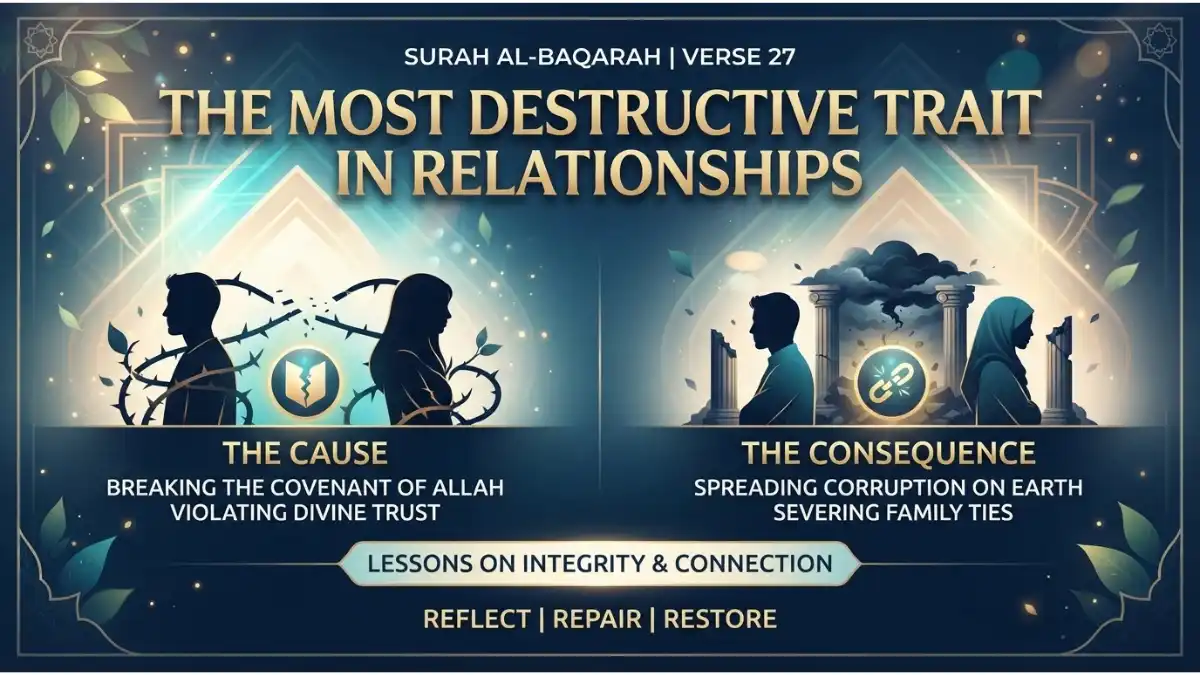
In the preceding verse (Surah Al-Baqarah Verse 26), Almighty Allah addressed those whose intellectual arrogance caused them to mock divine parables and dismiss subtle signs. Continuing this thematic progression, Surah Al-Baqarah Verse 27 exposes the internal disease that causes individuals to disrupt social harmony, betray sacred trusts, and ruin their spiritual standing. This verse delivers a sharp warning against three interrelated behaviors that destroy personal peace, community unity, and spiritual wellbeing.
“Alladhīna yanquḍūna ‘ahda-Allāhi mim ba‘di mīthāqihī, wa yaqṭa‘ūna mā amara-Allāhu bihī an yūṣala wa yufsidūna fil-arḍ, ulā’ika humul-khāsirūn.”
Translation: “Those who break the covenant of Allah after its ratification and sever that which Allah has ordered to be joined and cause corruption on earth. It is those who are the losers.” (QS. Al-Baqarah: 27)
Engaging in deep contemplation (tadabur) over this verse reveals a three-tiered progression of human misguidance. Destruction does not occur overnight; it begins with an internal breach of faith with God, manifests as broken human relationships, and ultimately spreads into systemic social and environmental harm.
The Three Dimensions of Destructive Behavior in Verse 27
A careful analysis of Surah Al-Baqarah Verse 27 highlights three specific spiritual and social transgressions condemned by the Almighty:
1. Breaking the Divine Covenant (Yanquḍūna ‘Ahda-Allāh)
This represents the foundational breach. The term ‘ahdallāh refers to the primordial covenant imprinted upon human nature (Fitrah) during pre-existence, as well as the intellectual and moral obligation to obey divine truth once guided. Breaking this covenant means turning one’s back on fundamental ethics, divine commands, and personal integrity in pursuit of temporary ego, greed, or pride.
2. Severing What Allah Has Ordered to Be Joined (Yaqṭa‘ūna Mā Amara-Allāhu Bihī An Yūṣala)
This second stage translates internal spiritual decay into external social disruption. Allah explicitly commands humanity to maintain key bonds: ties of kinship (Silat ar-Rahim), communal brotherhood, trust between business partners, and solidarity among neighbors. Those who suffer from spiritual arrogance sever these bonds out of petty grudges, stubbornness, or material gain, leaving a trail of broken trust and fractured families.
3. Spreading Corruption on Earth (Yufsidūna Fil-Arḍ)
The ultimate culmination of broken promises and severed relationships is widespread harm (fasād). Corruption on Earth encompasses both physical environmental destruction and the degradation of moral values—such as spreading false rumors, fueling societal polarization, engaging in systemic injustice, and undermining peace within communities.
Analytical Framework: The Anatomy of True Spiritual and Social Loss
At first glance, individuals who break contracts, manipulate relationships, or exploit others for short-term gain may appear to “win” in terms of wealth or power. However, the Quran closes this verse with a definitive verdict: “ulā’ika humul-khāsirūn”—“It is those who are the losers.”
| Dimension of Loss | Illusion of Short-Term Gain | Ultimate Reality (Verse 27) |
|---|---|---|
| Inner Peace & Mindset | Achieving material goals by ignoring moral boundaries. | Persistent inner anxiety, paranoia, lack of contentment, and fear of exposure. |
| Social Ecosystem | Discarding people after exploiting their trust for personal gain. | Complete loss of authentic relationships, social isolation, and betrayal when in need. |
| Moral Standing | Appearing clever, tactical, or politically dominant. | Complete loss of personal dignity, trust, and respect in the eyes of upright people. |
| Eternal Consequence | Accumulating short-lived worldly assets and influence. | Deprivation of divine mercy and accountability for spreading corruption. |
Human beings were created to live in interconnected, compassionate communities. When an individual continually severs social bonds, they isolate themselves in a prison of their own ego, losing both worldly harmony and eternal salvation.
Exegetical Insights from Classical Tafsir
Prominent classical commentators provided detailed insights into the meanings embedded within Verse 27:
1. Tafsir Ibn Kathir
Imam Ibn Kathir explains that the “covenant of Allah” includes all the instructions, obligations, and moral boundaries set forth in divine scripture. He highlights that the phrase “sever that which Allah has ordered to be joined” refers primarily to ties of blood and family kinship (Silat ar-Rahim), citing authentic prophetic traditions that warn against cutting off family bonds, as doing so deprives a person of divine mercy.
2. Tafsir Al-Qurtubi
Imam Al-Qurtubi elaborates on the linguistic depth of yanquḍūn, which derives from untwisting a tightly wound rope. This metaphor illustrates that covenants are initially firm and strong; deliberately breaking them requires conscious, destructive effort. He also notes that spreading fasād (corruption) includes supporting tyranny, promoting moral decay, and causing disunity among believers.
3. Tafsir At-Tabari
Imam At-Tabari underscores that true loss (khusrān) is not measured by bank balances or social rank. The ultimate loser is the person who trades eternal contentment, divine approval, and clean relationships for fleeting worldly advantages through deceit and arrogance.
A Reflective Narrative: The Heavy Burden of Unforgiving Pride
The destructive nature of severed ties can be seen in real-life human experiences. Consider the story of two brothers who co-founded a successful family business. After years of fruitful collaboration, a bitter disagreement arose over financial distribution and decision-making authority. Fueled by pride and toxic outside influences, the elder brother severed all communication, filed aggressive lawsuits, and forbade his family from speaking to his sibling.
For over a decade, they lived in the same city as total strangers. The elder brother expanded his business, built a grand home, and achieved financial status, yet his personal life was marked by bitterness, tension, and mistrust toward everyone around him.
When the younger brother suffered a sudden, life-threatening health crisis, the elder brother sat alone in his mansion, confronted by conscience. Realizing the futility of his pride, he rushed to the hospital. Through tears, the brothers embraced, forgave one another, and repaired their long-severed bond.
Reflecting on those lost years, the elder brother shared: “I spent a decade believing I had won the argument and protected my ego. In truth, carrying hatred and living with broken family ties was the heaviest, most exhausting burden of my life. The moment we reconciled, it felt as though a mountain of stress was lifted from my chest. I realized that keeping a broken covenant makes you poor, no matter how much money you have.”
Three Practical Steps to Rebuild Broken Bonds Today
To embody the lessons of Surah Al-Baqarah Verse 27 and avoid the spiritual bankruptcy of being among the “losers,” we can practice three actionable steps:
- Initiate Reconciliation with Severed Connections:
Reflect on your personal life: Is there a family member, relative, or long-time friend with whom communication has ceased due to past misunderstandings or pride? Take the high road. Send a polite message, check on their well-being, or offer a sincere apology without insisting on proving who was right or wrong.
- Audit and Fulfill Your Pending Commitments:
Review your active promises, financial obligations, and professional agreements. If you have delayed fulfilling a promise to your family, employees, or business partners, take immediate steps to honor it or communicate transparently.
- Become a Force for Peace and Unity in Your Community:
Ensure that your presence—both in person and on social media platforms—promotes harmony, constructive dialogue, and healing. Refrain from spreading unverified rumors, stirring controversy, or engaging in gossip that fractures relationships.
A Heartfelt Prayer for Wholeness and Reconciliation
“Allāhumma allif baina qulūbinā, wa aṣliḥ dhāta baininā, wahdinā subulas-salām, wa najjinā minaẓ-ẓulumāti ilan-nūr. Allāhumma lā taj‘al fī qulūbinā ghillal-lilladhīna āmanū, Rabbanā innaka Ra’ūfur-Raḥīm. Amīn Yā Rabbal-‘Ālamīn.”
Translation: “O Allah, reconcile our hearts, mend our relationships, guide us to the paths of peace, and deliver us from darkness into light. O Allah, do not place in our hearts any resentment toward those who have believed. Our Lord, indeed You are Kind and Merciful. Amin, O Lord of the Worlds.”
Frequently Asked Questions (FAQ)
Question: “How should one deal with a relative or associate who repeatedly toxicates or cuts off communication despite repeated attempts at reconciliation?”
Answer: Your primary responsibility is to fulfill your moral duty before Allah by keeping the door of reconciliation open, offering peace, and freeing your heart from malice. If the other party persistently rejects communication or inflicts ongoing emotional harm, you are not expected to remain in a abusive situation. Maintain respectful boundaries, pray for their well-being from a distance, and rest assured that you are no longer accountable for severing ties.
Question: “What constitutes ‘fasād’ (corruption) in modern everyday life?”
Answer: In contemporary contexts, fasād includes spreading disinformation, provoking hatred in social media communities, engaging in workplace sabotage, exploiting natural resources irresponsibly, and breaking ethical standards in business dealings. Any action that disrupts peace, trust, and justice in society falls under the concept of corruption on Earth.
This article is part of the thematic study series: Summary of Tadabur Surah Al-Baqarah