
Introduction: A Shift to a Warm and Inclusive Divine Call
After twenty consecutive verses detailing the traits of the righteous, exposing the stubbornness of disbelievers, and dissecting the psychology of hypocrites, Surah Al-Baqarah shifts its tone in verse 21. Here, the Quran transitions into a warm, inviting, and all-encompassing call addressed directly to every human being.
In the spiritual journey of a servant, this verse serves as a grand portal opening a direct dialogue between the Creator and all of creation. It lays down the fundamental foundation of monotheism (Tawhid), establishing why devotion belongs solely to the One who originated existence.
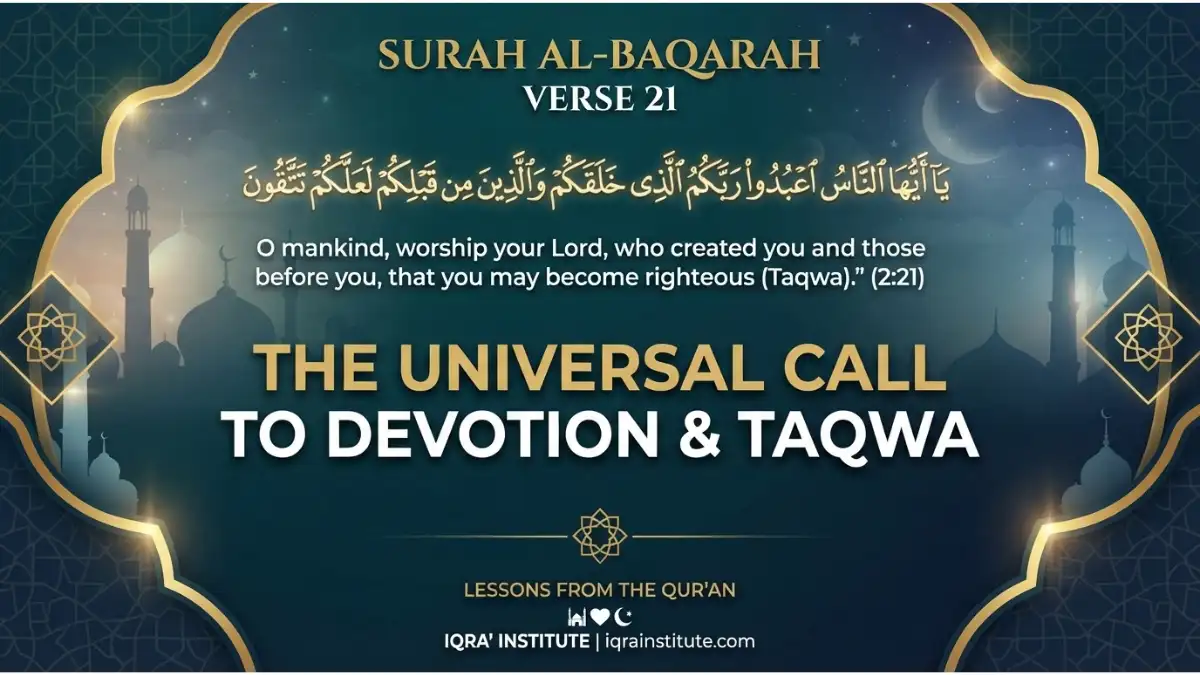
“Yā ayyuhan-nāsu‘budū rabbakumulladhī khalaqakum wal-ladhīna min qablikum la‘allakum tattaqūn”
Translation: “O mankind, worship your Lord, who created you and those before you, that you may become righteous (attain Taqwa).” (QS. Al-Baqarah: 21)
1. The Universal Scope of “Yā Ayyuhan-Nās” (O Mankind)
Notice the opening phrase: Yā ayyuhan-nās (“O Mankind!”). This phrasing presents a significant linguistic and theological dimension within the structure of the Quran.
God does not restrict this invocation to “Yā ayyuhalladhīna āmanū” (“O you who have believed”). Nor does He address a specific tribe, nation, race, or social class. This is the very first general call to all of humanity in the compilation order of the Quranic text.
- Inclusivity Beyond Background: The call embraces every individual regardless of past mistakes, moral shortcomings, or social standing.
- An Invitation to Return: For anyone who feels alienated from faith or weighed down by past errors, this invocation serves as an open door reminding them that divine mercy remains accessible.
- Establishing Universal Accountability: By addressing all human beings, the Quran establishes that every soul possesses an inherent capacity to recognize its Creator and seek moral uprightness.
2. The Rationale of Devotion: Why Worship the Creator?
Why does the verse anchor the command to worship (‘Ibadah) upon the premise of creation—“who created you and those before you”?
The logical reasoning is straightforward yet profound: The Creator inherently knows the design, purpose, and balance of His creation.
Consider an analogy: when acquiring a complex device, one refers to the manufacturer’s user manual to ensure optimal performance and prevent damage. Similarly, human existence is intricate. The Creator understands the human psyche, what brings inner peace, and what leads to spiritual degradation.
Worship in Islam is not a requirement that benefits God; rather, it fulfills an essential human need. When human beings refrain from worshipping their Creator, they do not cease worshipping altogether—they inevitably redirect their devotion toward lesser entities, such as wealth, social status, public opinion, or ego.
3. Understanding Taqwa as Inner Awareness and Moral Mindfulness
The ultimate purpose of this divine instruction concludes with the phrase: la‘allakum tattaqūn—”so that you may attain Taqwa.”
Taqwa is often translated as “righteousness,” “piety,” or “God-consciousness.” Beyond formal definitions, Taqwa acts as an internal moral compass and heightened spiritual sensitivity.
- Mindfulness in Daily Decisions: A person with Taqwa exercises self-restraint when faced with harm or temptation and acts proactively toward righteousness.
- Protection and Shield: Linguistically rooted in the concept of protection (wiqayah), Taqwa shields the human spirit from moral corruption and inner discord.
- Clarity and Guidance: Taqwa grants an individual the discernment (furqan) needed to navigate complex ethical challenges with clarity and composure.
Analytical Breakdown: Key Components of Verse 21
The table below breaks down the structural elements of Surah Al-Baqarah verse 21 and their spiritual applications:
| Quranic Phrase | Linguistic Meaning | Theological & Practical Dimension |
|---|---|---|
| Yā ayyuhan-nās | O Mankind! | Universal invitation to all human beings regardless of background or past deeds. |
| ‘Ubudū Rabbakum | Worship your Lord | Directing exclusive devotion, submission, and reliance to the Sustainer. |
| Alladhī khalaqakum | Who created you | Rooting the obligation of worship in the factual reality of divine creation. |
| Wal-ladhīna min qablikum | And those before you | Highlighting the continuity of human existence and divine providence across generations. |
| La‘allakum tattaqūn | So that you may attain Taqwa | Defining the ultimate objective of worship: developing God-consciousness and moral integrity. |
Classical Tafsir Insights on Verse 21
Classical Quranic commentators have highlighted several key insights regarding this verse:
Ibn Kathir notes that this verse contains the first explicit command in the Quranic arrangement. He explains that God highlights His sole creation of humanity and past generations to demonstrate that He alone possesses the right to be worshipped, without partners or intermediaries.
Al-Qurtubi emphasizes that the term Rabb implies nurturing, sustaining, and guiding. Worshipping the Rabb is an acknowledgment of ongoing dependency upon divine grace rather than merely an obligation.
Fakhr al-Din al-Razi points out the logical progression: recognition of creation leads to recognition of the Creator, which logically leads to submission and devotion through worship.
Practical Steps to Apply the Verse in Daily Life
To translate the lessons of Surah Al-Baqarah verse 21 into practice, consider the following action steps:
- Engage in Daily Self-Reflection: Dedicate a few minutes daily to acknowledge your origin and purpose, reinforcing inner humility.
- Purify the Intentions of Worship: Perform acts of devotion intentionally to build God-consciousness rather than as mere routine.
- Align Actions with Moral Values: Use Taqwa as an active filter in professional, social, and personal decision-making.
A Short Prayer for Guidance and Sincerity
“O Allah, Creator of mankind and Sustainer of all generations, soften our hearts toward Your guidance. Grant us the grace to worship You sincerely, refine our character, and bless us with true Taqwa and inner peace. Amen.”
Frequently Asked Questions (FAQ)
Question: “Why does the Quran address ‘mankind’ instead of ‘believers’ in this specific verse?”
Answer: This verse introduces the foundational call to monotheism and worship. Because the truth of creation applies universally to every human being, the address encompasses all humanity to invite everyone to recognize their Creator before specific rulings for believers are elaborated.
This article is part of the thematic study series: Summary of Tadabur Surah Al-Baqarah